

In running a data center, one system plays a critical role—the HVAC system. Data centers are essentially computer systems that operate 24/7, ensuring that each component and piece of IT equipment in the racks remains operational and free from heat-related failures.
To emphasize the importance of this system: if the HVAC system isn’t properly managed, it’s no surprise that someone might find themselves looking for a new job due to the resulting failures.
Like other engineering systems, data centers are not exempt from the Second Law of Thermodynamics, a fundamental principle that sets limits on the performance of most equipment and systems. This law dictates that anything generating or consuming energy produces heat as a byproduct, increasing entropy (disorder) within the system.
Without proper cooling, the heat generated by servers would lead to system failures, reduced efficiency, and significant risks to the reliability and longevity of the data center infrastructure.
This article outlines the most important skills hiring managers and recruiters should look for to find the best candidates for HVAC roles in data centers.
1. Ability to Interpret Plans and Drawings
An engineer may estimate the size of an HVAC system by examining critical equipment (chillers, coolers, etc.), but without the ability to interpret plans and drawings, they will never fully understand the system’s complexity.
To be effective, a facilities engineer must develop a mental map of the HVAC system. This skill is essential for planning maintenance work and ensuring smooth operations. The ability to read and interpret plans and drawings is a fundamental requirement for anyone working with HVAC systems.
2. Understanding How the System Works
Beyond interpreting plans and drawings, a facilities engineer must also understand how the HVAC system functions. Flow diagrams—such as Piping and Instrumentation Diagrams (P&IDs)—allow engineers to visualize underlying processes, from chilled water circulation to the refrigerant circuit and air distribution.
A strong grasp of thermodynamics separates great engineers from average ones. Understanding heat transfer, pressure relationships, and phase changes within an HVAC system provides a solid foundation for troubleshooting and optimizing performance.
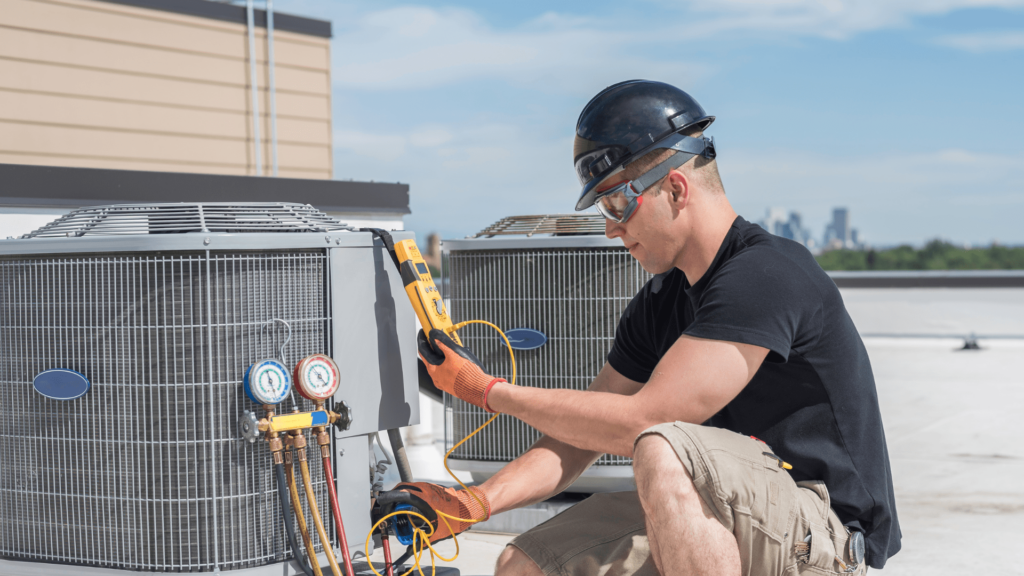
3. Knowledge of Mechanical, Electrical, and Automation Components
A facilities engineer must not only understand the mechanical aspects of HVAC equipment but also how electrical and automation (control) systems interact with it. This is especially important because most applicants you will encounter will have a mechanical engineering background or a related mechanical discipline.
A deep understanding of failure points in each component is critical, as it enables engineers to detect potential issues early and implement preventive measures. Proper installation, material selection, and effective spare parts management all play a vital role in ensuring system reliability.
4. Theoretical Knowledge of Refrigeration & Air Conditioning
A facilities engineer cannot fully understand an HVAC system without a solid foundation in the science behind refrigeration and air conditioning.
This knowledge acts as a troubleshooting framework. Without it, an engineer attempting to diagnose HVAC problems is like a soldier shooting in every direction—without knowing where to start.
5. Ability to Isolate Components for Maintenance and Troubleshooting
During troubleshooting, a facilities engineer may require assistance from third-party service providers. However, they are still responsible for conducting an initial assessment.
Knowing which part of the system to isolate—and when—is a key trait of a seasoned HVAC troubleshooter. A skilled engineer always verifies the root cause of the issue before proceeding with repairs. Proper isolation is a crucial step in diagnosing the problem before moving on to the hands-on aspects of troubleshooting.
6. Identifying Wearable Components
A skilled facilities engineer should be able to recognize critical wearable components such as compressor bearings and seals, expansion valves, chilled water pump motor bearings, filters, and strainers.
This knowledge comes from a combination of documentation review and hands-on experience. While manuals provide baseline recommendations, real-world environmental conditions affect component lifespan. Experience teaches engineers which parts require more frequent attention.
7. Ability to Read Equipment Operating and Maintenance Manuals
One of the most fundamental troubleshooting skills is the ability to read and apply information from equipment manuals. While experience can speed up troubleshooting, manuals ensure that repairs and maintenance restore equipment to its standard operating conditions.
A good troubleshooter doesn’t just fix a problem—they ensure the system continues to perform as designed. Therefore, knowing how to read and interpret OEM manuals is essential for effectively managing HVAC systems.
8. Understanding the Science Behind Failures
What separates the best engineers from the rest is their ability to understand the science behind failures. This knowledge enables them to develop long-term solutions through root cause analysis methodologies.
Understanding why heat causes bearing failures, how misalignment leads to premature breakdowns, why cooling is essential, and how contaminants accelerate wear is crucial for preventing recurring issues. A great troubleshooter doesn’t just fix problems; they prevent them from happening again.

Contingency & Retained Recruitment Service
Transparent and Competitive Pricing
✅ Pre-screened Candidates — Each applicant undergoes a rigorous screening process to assess skills, experience, and cultural fit.
✅ Flexible Guarantee Period — Enjoy peace of mind with our free replacement guarantee for every successful hire.
Contact us today or fill out the form to get started with fast, reliable, and quality-driven hiring solutions.
Final Thoughts
Hiring a top facilities engineer requires looking beyond basic technical skills. A great HVAC troubleshooter possesses a deep understanding of thermodynamics, system interactions, failure points, and preventive maintenance.
A skilled engineer doesn’t just repair HVAC systems—they ensure long-term reliability, efficiency, and performance, making them a critical asset to any data center operation.

No responses yet